Search This Blog

Sunday, June 05, 2016

Meanwhile back at home


When the weather is nice and the sky is blue, it’s best to stay outside and enjoy life. The parents were in around and in Nuremberg for a short visit.


One must thing to see and do. Having a refreshing drink at Wanderer after climbing the castle, queued up with hundred of tourists doing the same thing.


Beer only ain't a complete meal. Consequently, we lit a balcony BBQ later that day.


Even the dog doesn't want to walk anymore.


Sunday, May 08, 2016

Back to something familiar

I have spent much time there - Anttila Converter Station


There it was, next chance to travel to Finland. I joined a colleague whose sister was participating in a student’s exchange in Pallonmäki, close to Helsinki, but far enough outta the city to be depended on any public transport (which you don’t take too often because it just feels like forever). Meaning: we stayed in the centre, less than 100 metres walking distance to the harbour.

World Heritage wooden riverside storage buildings and old church in the backgound in Porvoo

The harbour - the place where we spent the Friday evening and this was leading me to an event I have missed during my entire 9 months stay 2 years ago – the old-timer and self-pimped vehicles gathering at the market place. Obviously, many cracks love to spend some time in garage to re-build, re-design and re-construct formerly used cars. So they show what they got every months’ first Friday.


Street names in Finnish and Swedish


The next morning we went to Palojoki. You can’t put down an invitation for breakfast on a sunny morning. Her guest parents welcomed us warmly, although never seen before. All other activities are well-known. Sightseeing in Helsinki, short trip to Porvoo with its world heritage the wooden storage houses and shopping some Finnish specialties – fish and liquor.


Helsinki harbour, the Viking Line has just landed, small ferry going to Suomenlinna

Tuesday, April 26, 2016

Diving into another world: Japan, Part 4: Kyoto


Still tired from marching through Kanazawa we took the evening train to our next destination. Again, well organised and easy to hop on, again almost impossible to miss. We are more and more versed in doing travels in Japan. When leaving the train and the station and while getting some sort of orientation we were surrounded by people trying to get from A to B – hectic and chaos everywhere. The so well-known structure and systematised atmosphere got lost. F or us, it felt like being stones in a river and the water was just swirling around us.


The hotel was only a few blocks away and easy to reach. Lucky, as we were not in the mood anymore for a long fully packed walk through the city. The breakfast the next morning was typical: rice balls with diverse fillings, miso soup, sea grass and green teen. Doesn’t sound that much but somehow it keeps you full for quite some time.


Ready and prepared we hit the town, took the train from the main train station (yes, again thousands of people) for one stop and arrived at the Fushimi Inari Taisha Shrine. Rich in colour it seems to be one of the most interesting temples in Japan. So I heard. The Shrine was beautiful, mostly in red colour, but even more impressing were the tracks and paths leading up the hill. For several kilometres, wooden gates all over the place, you walk through them where ever you go. It’s mystical and, somehow, throws you back in time. The first 1000 metres has got 1000 of them. The (sun) lights turn them in deep shiny red colour. A picture everybody wants to ban on their cameras which makes it nearly impossible to get one without any persons on it. The further you walk uphill, the less people were there.


At some point, we needed to go on. The next must see – the Golden Temple Kinkaku-ji, literally "Temple of the Golden Pavilion". Located almost opposite from the place we’ve just been. It seems school classes were having the some idea, or they just had some kind of excursion day or something. Different classes marked with hats in different colours. All moved around in bunches – us in the middle. The temple is a Zen Buddhist temple. It’s got 3 levels, each of them constructed in different ages and therefore in a specific style which are shinden, samurai and zen. But one thing they do have one thing in common – the thin layer of gold at the surface. I’ve never seen such a building like this.


The next thing on our list has been the Bamboo Garden. Unlucky with the weather, we’ve been running around in rain. Positive side effect: less tourists. I mean still enough to bomb pictures. But we had some tourist free moments. The trees were massive, maybe 20 metres or so in height, dipping everything in fresh greenish colour and that just made it look so unreal.


On the way back we were stopping by the old town. Tiny streets and traditional houses have thrown us back in time. Shops in the basements offered things for all needs. Mostly food and regional things, as well as hand crafted goods.


Sunday, April 24, 2016

Diving into another world: Japan, Part 3: Nagano to Kanazawa


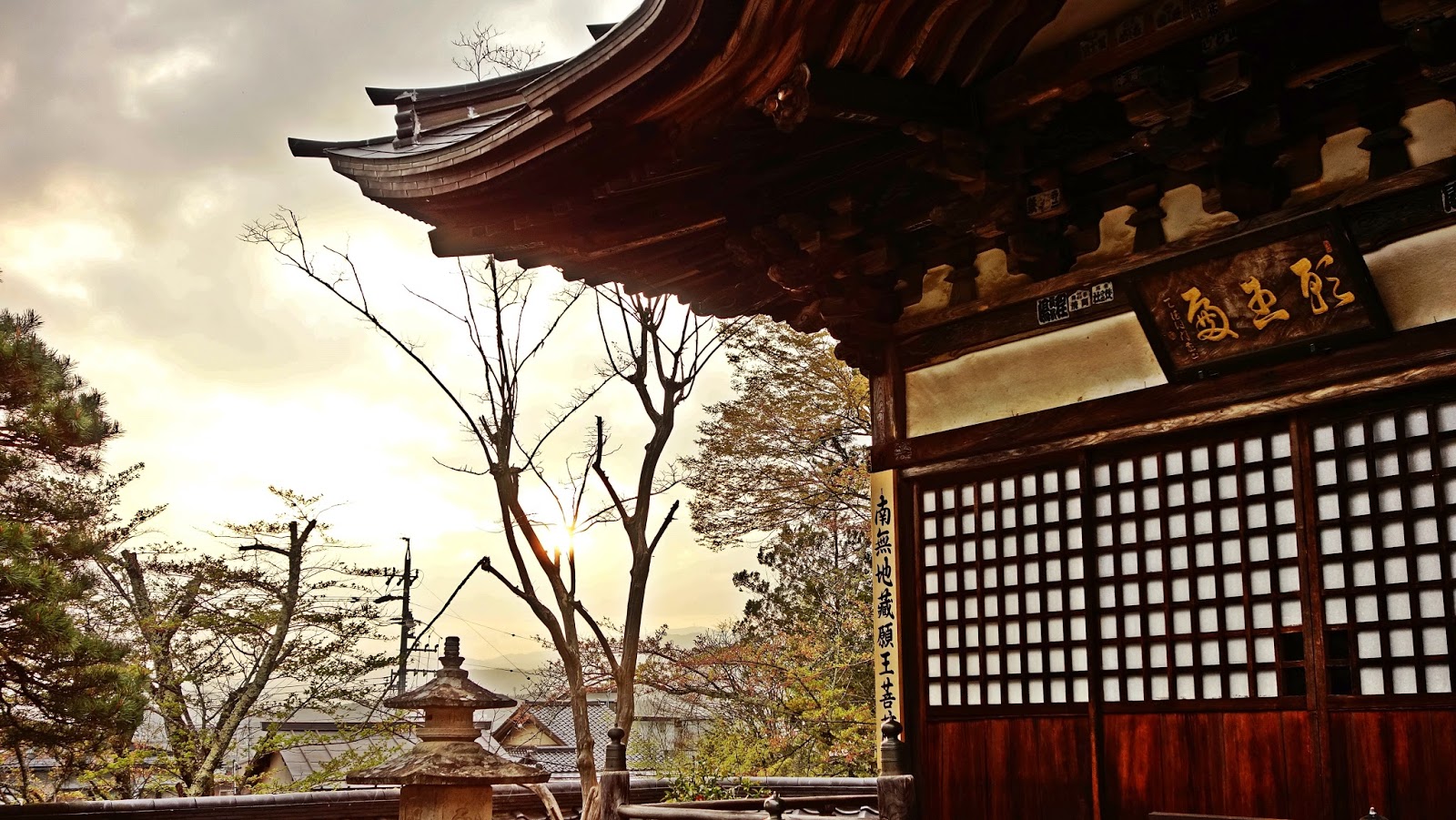
Time to go more north, again by train, this time with a little bit more luck getting some reserved seats for us. In Nagano, we needed a few moments to get back the orientation. Somehow we didn't know where to go and the guesthouse we have picked was more or less hidden than obvious located. A free drink (Sake, of course) helped to cool down a bit. Nagano itself didn't offer that much from the touristic point of view. However, the Zenkō-ji Temple is worth a visit, built back in the 7th century and therefore, it still looks so much alike. I felt like thrown back in time. The small street leading to the temple is packed with shops offering traditional goods for all interests.


The dinner was adventurous too. The first challenge was finding an appropriate restaurant which is serving not too fancy food, neither too cheap nor too overprized. An undertaking not that easy - we usually walked through half of the city before making the decision of entering a specitic restaurant. You never knew what to expect when checking through the window from the outside or overlooking the menu pictures. Basically, it goes how it always goes with those things. You finally choose the first available. The restaurant was crowded - couples and some bigger groups were arguing and discussing vociferously. We were guided to a table, barefooted, and not really surprisingly, it was getting more and more complicated because no one was capable of the English language. So here they come, the problems of misunderstanding and miscommunication, I thought. Not in Japan, they have a solution for everything. The waitress pulled out her mobile phone, typed something in and showed the translation - our way to communicate. As we had no idea what to eat we ordered the same dish all other guests had by pointing at a metal bowl in the middle of our neighbour's table. It contained hot water and additionally, they served some plates with vegetables, raw ham, noodles and hot broth. We looked at each other and had no clue what to do with it. Luckily the waitress noticed our overextension and she tried to explain gesticulating in Japanese. It helped a bit. I am still not sure if we did it the right way by furling the veggies in the ham and boiling it shortly. Quite a procedure, but with a certain fun factor.


The journey continued, again by train, again more north. We headed to Takayama, located in the Gifu Prefecture. It's still well known for its sophisticated knowledge in carpentry. It's said their carpenters have worked on the most famous temples in Kyoto and surrounding. The inner city is famous for its wooden buildings. Loads of tourists promenade through the streets day-in, day-out, but it's getting noticeably less crowded in the evening hours, especially after dinner time when people have tried the world famous and high-class Hida Beef. One highlight was the overnight stay in the Hodakaso Yamanoiori Hotel. Shoes had to be left near the entrance. Elsewhere, only slippers were allowed. The room offered coziness, and two single mattresses placed on the floor. Best thing and a not-yet-known experience: "Onsen" bath! The Japanese way to relax and free the mind. With 40°C it's quite hot and you can't stay in there for too long.


Next stop: Kanazawa ("march of gold", when, according to the legend, farmers found flakes of gold while digging for patatoes). Geisha areas (Higashi District) still exist, however, we didn't see any. The traditional houses are still made of wood with its common sliding shutters. The Kenrokuen Garden is well known and one of the most beautiful gardens in entire Japan filled with various trees, plants, flowers, ponds and waterfalls. Nagamachi, the ancient Samurai area, was on our route before it was time to catch the train.